
"He Said, She Said"
Or should he whisper, imply, and stroke her face as she giggles and blushes?
Although I’ve always loved reading, I knew little about writing, and even less about publishing before my first novel launched in 2019.
I was completely unprepared for how much work all of it would be. I didn’t have any social media accounts, didn’t know anyone else who’d published a mystery, and had never met a book publicist. I had a vague idea that the publisher would put my books in bookstores and libraries, and people would flock to buy them, but that, surprisingly, turned out to be a myth.
Long before I won my first contract in a publisher’s contest, I had the good luck of finding a fantastic author, editor, and teacher named S.L. Wisenberg (via a Chicago Tribune editorial she’d written). At the time, I’d been writing long, blabby manuscripts that meandered through the lives of way too many characters and got bogged down in irrelevant details. Sandi guided me through completing a coherent first draft of a mystery novel that had a beginning, middle, and end, with red herrings sprinkled along the way. It was filled with everything a good mystery requires, including a surprise reveal.
We’d usually meet at one of many Chicago cafés on the near north side. I’d hand Wisenberg a chapter, and she’d whip out her pencil case. It was shocking for me to learn how many rookie mistakes I made on every page. I didn’t do quotation marks correctly, had way too many run-on sentences, and peppered every chapter with a series of cliches and overused phrases like, “cooked to perfection.”
Also, my dialogues went on ad nauseam, like a boring conversation you might have with a nosy neighbor. I also added too many irrelevant factoids that nobody needs or cares to know. I could go on excoriating my early writing attempts, but that’s all in the past. Suffice to say, I had a lot to learn.
I tried not to argue with S.L. Wisenberg, because she’d written articles and books, taught writing for adult learners at Northwestern University and the University of Chicago and was well-versed in the world of writing and publishing. Every week, she explained basic rules as she circled mistakes, requested more human-sounding interaction, and used a red marker to slash through all the different ways I quoted people who “advised, recommended, suggested, beseeched, or pleaded with other characters.
After a few weeks, I finally asked, “What’s wrong with descriptive terms?”
Turned out that she wanted me to use the old chestnuts, “he said,” or “she said,” when anyone spoke. Or I could say “he or she asked,” if there was a question involved.
“WHAT?” I nearly shouted, prepared to stand up for what I believed in, like whispering, urging, and promising.
“How can I write an entire manuscript using those same boring words? Why can’t my characters mumble, mutter, demand, claim, request, or hiss?”
“If you continuously write ‘he said or she said,’ Wisenberg spoke slowly to calm me down, “readers will focus on WHAT your character said, rather than the fact that she murmured, implored, petitioned, or mandated it.”
For a few minutes, I concentrated on nibbling my almond croissant. Then I looked at her and asked, “What if a character needs to exclaim, shout, bellow, or cry?”
“You can get away with that sort of thing once in a while,” she said in her assertive Texas twang, “but if you do it consistently, you’ll distract readers into paying attention to HOW a character says something rather than the meaning behind what they said.”
She referenced Shakespeare, as if that guy knew anything about writing a mystery. His characters also “said” most things, instead of purring, crooning, griping, or grumbling.
I gaped at her as if she’d sprung a leak, but I knew I was defeated. “Fine,” I said. “You win.”
Later, on my way out the door, I whispered to myself, “We’ll just see about that.”
Thanks to Karen Docter for posting this essay today (9.29.25) on her much-admired website: Karen’s Killer Book Bench!
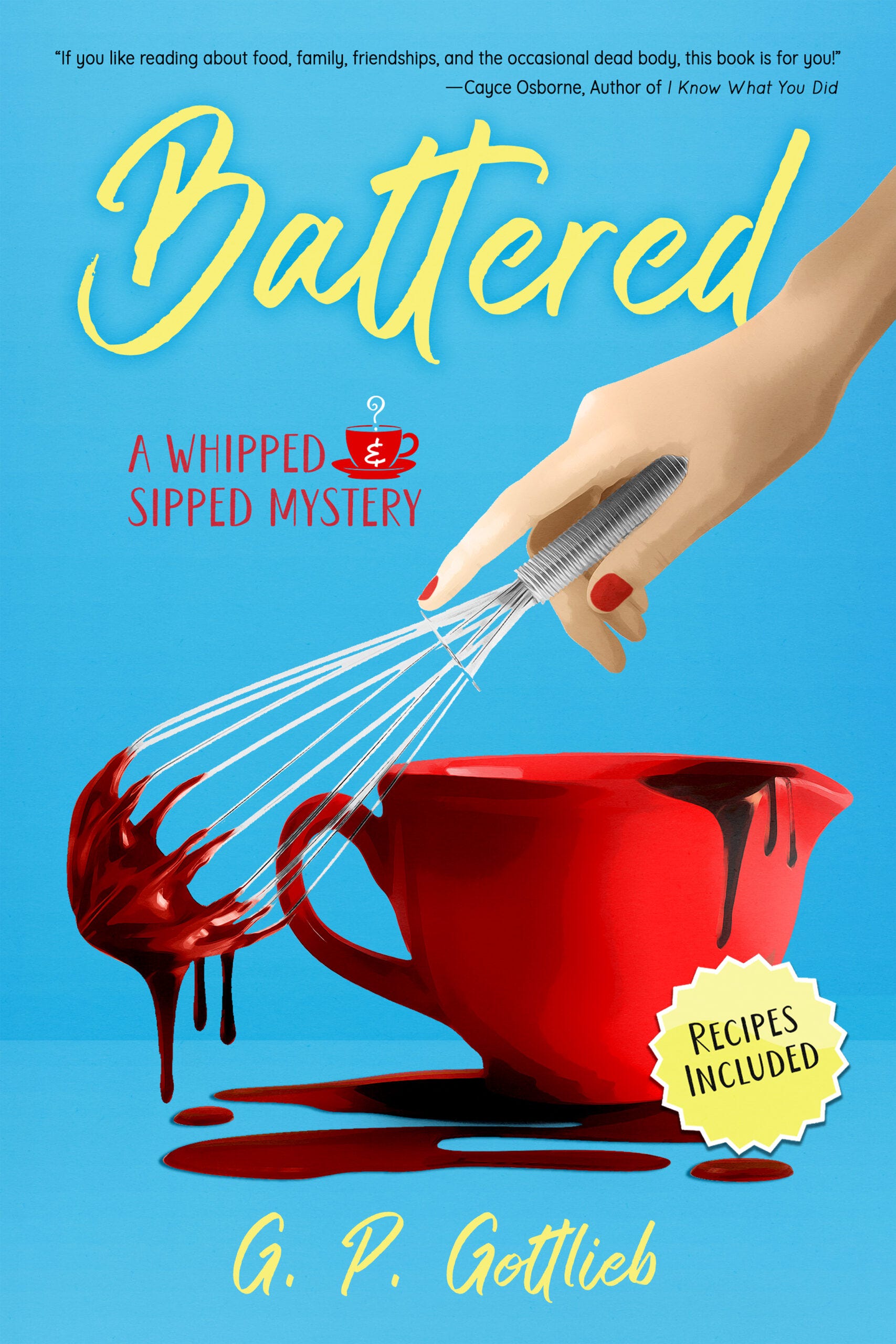
GP Gottlieb is the author of the Whipped and Sipped Mystery Series (Battered was re-released 9/2025 and is available on Bookshop.Org, Amazon, Barnes & Noble, Apple, Kobo, and Smashwords). She’s a member of the Blackbird Writers, on the Sisters in Crime Chicagoland Board, and active in SinC Colorado. She likes posting on Facebook, reads voraciously, and has interviewed over 250 authors for New Books in Literature, a podcast channel on the New Books Network. Gottlieb’s stories have been published in Pure Slush, Another Chicago Magazine, Grande Dame Literary, and other journals and anthologies.
The writer's journey is full of lifelong lessons. Thanks for sharing this one.
Those are great lessons. Your story reminds me of the first class I took. It also was in Chicago at a University of Chicago Saturday morning writing course. Molly Ramanujan taught it and I learned a great deal. Unfortunately she passed at least ten years ago. I still have her book of short stories. Molly really knew how to write!